RO Systems

iSpring Water Reverse Osmosis

This category gathers iSpring under-sink reverse osmosis drinking systems. Compare stage counts, flow rates, remineralization and UV options to decide which one fits your home.
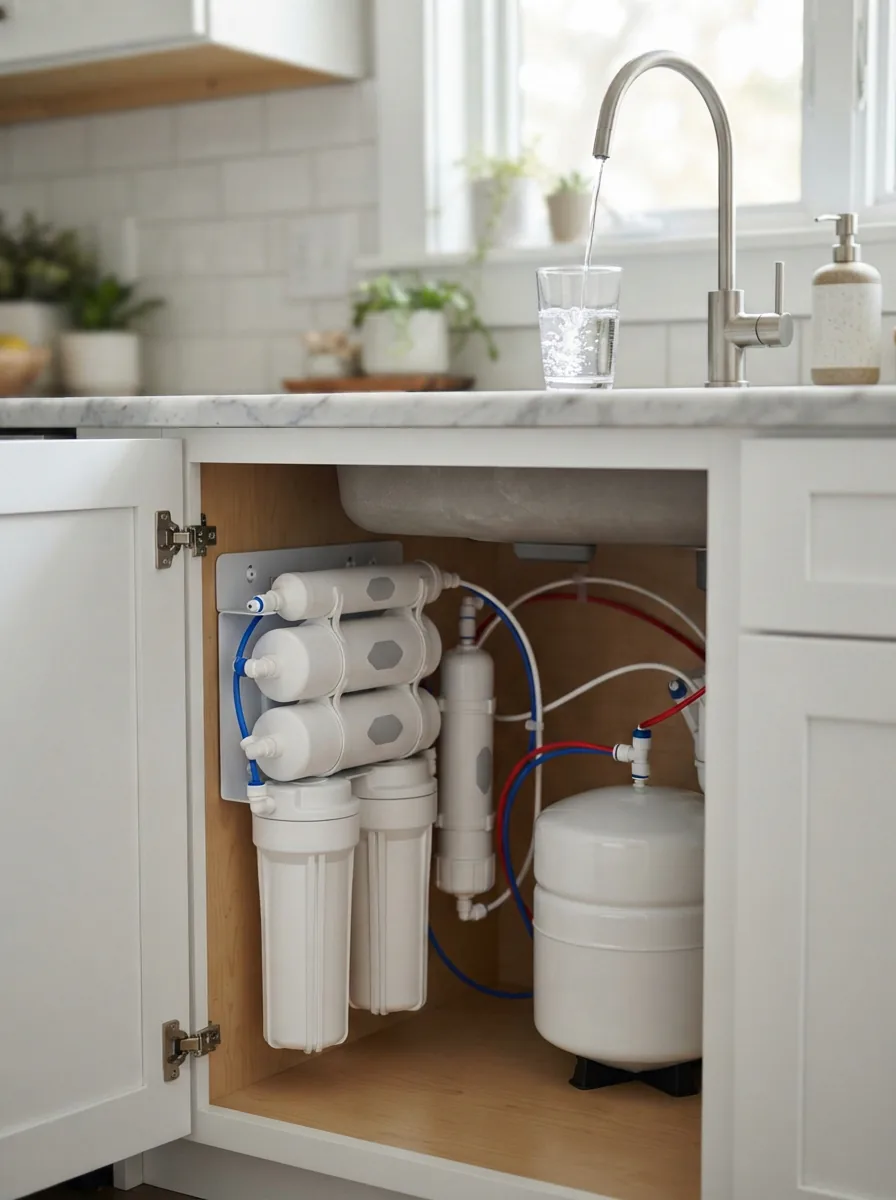
An under-sink reverse osmosis drinking water system installed inside an open kitchen cabinet with clear water pouring into a glass above
Just Added to the Category

Six RO systems worth comparing

Five-stage under-sink reverse osmosis system with white manifold, four filter housings and a slim storage tank on a counter

iSpring RCC7 5-Stage Under-Sink Reverse Osmosis Drinking Water System, 75 GPD Flow

A proven five-stage setup: sediment and carbon pre-filters clear chlorine and grit, the 75 GPD membrane does the reverse osmosis work, and a chrome faucet completes the install. The tank refills in a few hours, enough for most households, and every filter is easy to reach when it is time to swap.
Six-stage reverse osmosis system with an alkaline remineralization cartridge mounted beside a compact storage tank

iSpring RCC7AK 6-Stage Reverse Osmosis System with Alkaline Remineralization for Taste

Remineralization is the headline here. After the membrane removes dissolved solids, an alkaline stage adds minerals back and lifts pH toward a natural level, so the water tastes rounded instead of flat. Pre-filters keep chlorine and sediment away from the membrane, and the tank refills in a few hours for evening use.
Seven-stage reverse osmosis system with a stainless UV sterilizer chamber and storage tank under a kitchen sink

iSpring RCB7BPT 7-Stage Reverse Osmosis System with UV Sterilizer for Well Water

Households on well water usually look past taste and straight at microbial protection. A UV stage sits at the final step before the faucet and adds a safeguard that carbon alone cannot. The seven-stage layout still runs 75 GPD through a storage tank, so the flow at the glass is modest but steady.
Tankless high-flow reverse osmosis system with a compact white body and brushed faucet under a modern kitchen sink

iSpring RCS4T 4-Stage Tankless Reverse Osmosis System, 400 GPD High Flow for Families

No tank, no waiting. A tankless 400 GPD design makes water on demand, which frees the whole cabinet side for storage and suits a household that fills several bottles at dinner. Plumbing is a little more involved before you buy, and the membrane is larger, but immediate flow is the trade many people accept.
Five-stage reverse osmosis system with a flow sensor valve, white manifold and slim storage tank on a kitchen counter

iSpring RCB5E 5-Stage Reverse Osmosis System with Water-Saving Flow Sensor Valve, 75 GPD Use

A flow sensor valve sends rejected water back to the supply line instead of the drain, which lowers waste during ordinary use. The five-stage path still covers sediment, chlorine and the membrane at 75 GPD, and the tank keeps water ready for a full pitcher without running the system dry.
Eight-stage reverse osmosis system with a remineralization cartridge and storage tank on a stainless kitchen counter

iSpring RCC1000AK 8-Stage Reverse Osmosis System with Alkaline Polishing Cartridge

Eight stages sounds like a lot, and the honest reading is simpler: extra carbon polishing plus an alkaline remineralization step after the membrane. The result is water that tastes clean and mineral-balanced straight from the dedicated faucet. The tank refills over a few hours, which handles daily drinking and cooking.
Seven-stage tankless reverse osmosis system with a white body and blue filter caps mounted under a kitchen sink

iSpring RCB2000 7-Stage Tankless Reverse Osmosis System, 2000 GPD for Large Households

This seven-stage tankless design is built for households that move a lot of water. Reverse osmosis handles dissolved solids and chlorine taste, the high-flow path keeps up when several glasses are filled in a row, and the compact body leaves the cabinet free for storage. Well-suited to large families.
Top picks by setup

Three setups buyers compare most

Tankless 500 GPD reverse osmosis system with a compact white body and brushed nickel faucet under a sink

iSpring RCB500W 5-Stage 500 GPD Tankless Reverse Osmosis System with Brushed Nickel Faucet

A 500 GPD tankless layout means water is made the moment you open the faucet, so there is no tank to refill at dinner. The pre-filters and membrane fit under a standard sink with room left over, and the brushed nickel faucet keeps spots off the glassware.
Eleven-stage reverse osmosis system with a UV chamber and remineralization cartridge beside a storage tank

iSpring RCC1UP-AK 11-Stage Reverse Osmosis System with UV and Alkaline Remineralization

Eleven stages sounds like marketing until you read the path: sediment and carbon up front, the membrane in the middle, then UV and an alkaline remineralization step at the end. Households on well water often want both safeguards, and the tank covers evening demand.
Five-stage reverse osmosis system with a protective metal cabinet housing installed inside an under-sink cabinet

iSpring RCC7P 5-Stage Reverse Osmosis System with Protective Metal Cabinet Housing

The same five-stage path as a standard tank system, housed in a protective metal cabinet that helps where the under-sink space is damp or gets knocked during cleaning. Installation hardware is included, so most homeowners finish the swap on a weekend morning.
Kitchen counter scene with a glass of clear water poured at a dedicated reverse osmosis faucet beside a sink

Where these systems earn their place

Under-sink RO serves daily drinking and cooking, gives well-water homes an extra safeguard at the faucet, and fits where cabinet space is tight. The result worth weighing is consistent taste rather than faster flow.

Daily drinking water for a family

A tank system at 75 GPD refills over a few hours and covers cooking, drinking and a pitcher in the fridge for a family of four without demanding much cabinet space. Bigger households tend to outgrow it at dinner.

Well water homes that need UV protection

Households on well water often care less about taste and more about protection at the final step. Adding UV gives that safeguard, and remineralization handles the flat taste that can follow the membrane.

Small cabinets where tank space runs out

Where the under-sink run is crowded, tankless designs remove the storage tank entirely and deliver water immediately. Expect a higher price and more plumbing to plan before you buy, in exchange for the reclaimed space.

What actually changes the fit

Match flow rate to daily volume

A 75 GPD system refills its tank in a few hours, which is plenty for most families. Larger households or small offices usually do better with 200 GPD or tankless 500 GPD designs to avoid running the tank dry at dinner.

Decide between tank and tankless

Tank systems need more cabinet space but cost less and are simple to service. Tankless units free that space and deliver water immediately, at a higher price and with a little more plumbing to plan before you buy.

Weigh remineralization and UV

Remineralization addresses taste and pH after the membrane strips minerals away. UV adds a safeguard for households on well water. Care about taste first; add UV when microbial protection is the real concern.

Five directions in the range

Under-sink RO systems split into a few directions: tank versus tankless, remineralization for taste, and UV for well water. Start with the water problem you have, then match the stage path to it.

Five-stage tank systems for everyday drinking

The classic layout: a sediment pre-filter, carbon stages, a 75 GPD membrane and a storage tank. It costs less than the alternatives, is simple to service, and replacement cartridges are easy to source at any point in the first year.

Six-stage designs that add remineralization

A remineralization stage runs after the membrane and adds minerals back, lifting pH toward a natural level. Choose it when taste is the reason you started looking, not when your water already tastes fine.

UV-equipped systems for well water homes

A UV stage sits at the final step before the faucet and adds a safeguard for households on well water or anyone storing purified water. Plan on more plumbing and a power source before you commit.

Tankless high-flow units for tight cabinets

Removing the storage tank frees the whole cabinet side and delivers water immediately. The membrane is larger, the price is higher, and the plumbing takes more planning before purchase.

Compact systems for apartments and rentals

Compact five-stage units fit smaller sink runs and rental cabinets where a full tank will not clear the disposal. You accept a slower refill in exchange for an easier first install.
Five under-sink reverse osmosis systems with different stage counts lined up on a white kitchen counter
What shoppers reported

First-hand notes on choosing an RO system

I read the refill times twice before ordering. A 75 GPD tank filled in about three hours, which was fine for the two of us, but I could see it running dry with kids filling bottles at night. Tankless options cost more, and that trade made sense once I priced it out.
Decorative customer review avatar icon 1
Dana R.
Compared refill times before settling on a tank design
The first system I owned stripped everything out and the water tasted like nothing. Adding an alkaline stage changed that within a day, and pH moved back toward a level I actually enjoy. If taste is your main complaint, remineralization is the upgrade to weigh first.
Decorative customer review avatar icon 2
Marcus T.
Wanted remineralization after tasting flat water
Our water comes from a well, so the decision was never only about taste. UV sits at the last step before the faucet, which felt like a real safeguard when storing purified water. The extra plumbing took planning, and my plumber confirmed it was worth doing properly.
Decorative customer review avatar icon 3
Priya S.
On well water, wanted UV before the faucet
I measured twice and there was simply no room for a storage tank beside the disposal. A tankless design removed that problem and the water comes out immediately. I paid more than planned and gave up nothing but a refill timer, which I do not miss.
Decorative customer review avatar icon 4
Ben H.
Tight cabinet meant tankless was the only route
Before choosing, I checked what each set of pre-filters would cost every few months. Value packs that bundled the first year made the maths straightforward, and the membrane only needs attention every couple of years. Maintenance is the part I wish I had priced earlier.
Decorative customer review avatar icon 5
Elena V.
Priced filter changes across the first year

Common RO questions

Quick answers on flow rate, remineralization, UV and maintenance, so you can weigh trade-offs before choosing.
Roughly a few hours from empty under normal water pressure. Households that fill several pitchers or bottles each evening often prefer 200 GPD or tankless designs so nobody is left waiting on the tank.
It depends on taste. Reverse osmosis removes dissolved minerals and can leave water tasting flat; remineralization adds them back and raises pH toward a natural level, which most people prefer for drinking.
For municipal tap water it is optional. Households on well water, or anyone storing purified water for long periods, often value the extra safeguard that UV adds at the final step before the faucet.
Tank systems need room for the storage tank plus the manifold, usually along one side of the cabinet. Tankless designs remove the tank entirely and are the better fit where cabinet space is tight.
Pre-filters change every few months and the membrane every couple of years. Value packs that include extra pre-filters simplify the first year of changes, and an easy-mount faucet eases the swap.
Replacement reverse osmosis filter cartridges and a remineralization cartridge arranged on a kitchen counter beside a sink

Read installation and filter-change guides

Once you have narrowed flow rate and stage count, a short read on installation and filter changes usually settles the rest. The related posts cover the plumbing to plan and what the first year of maintenance costs.
Under-sink reverse osmosis water filtration system with stacked filter housings and blue tubing beside a faucet pouring clear water into a glass

iSpring Water Filter

Compare iSpring reverse osmosis drinking systems, whole-house filters, and softening options to match your water problem, household size, and installation space with certified models.

Modern kitchen scene with clear drinking water poured into a glass beside an undersink reverse osmosis unit and a whole-house filter housing

iSpring Water Systems

Compare iSpring reverse osmosis drinking systems, whole-house filters, and softening setups side by side, then match capacity, stage count, and coverage to your water and your home.
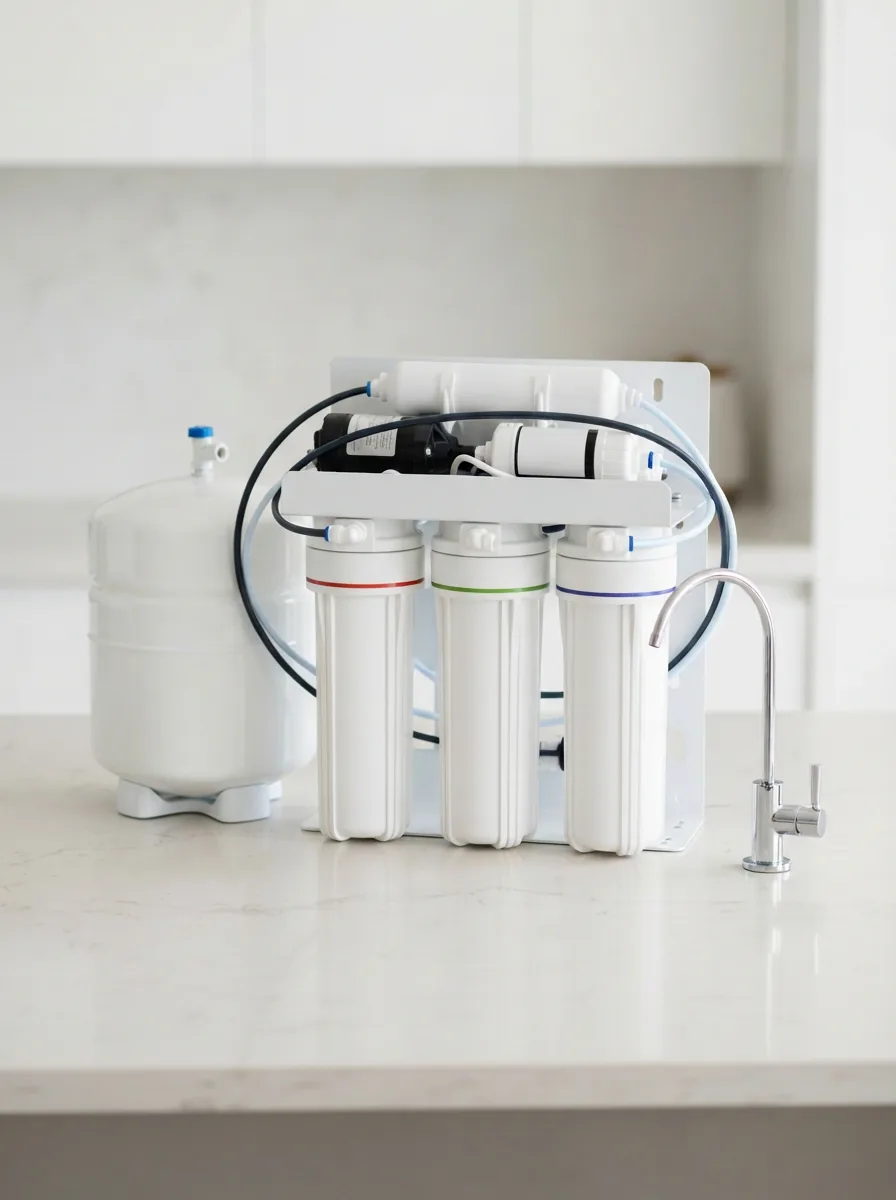
The iSpring RCC7AK six-stage under-sink reverse osmosis system with white filter housings, storage tank, tubing and faucet on a light countertop

iSpring Rcc7ak

The iSpring RCC7AK is an NSF/ANSI 58 certified 6-stage reverse osmosis system that remineralizes water for superb-tasting drinking water.