Water care

iSpring Water Filtration

This category covers reverse osmosis systems, whole-house filters, softeners, and countertop units. Compare output, stage count, and installation type to fit your water and plumbing.
A clear drinking glass filling with water at a modern kitchen sink faucet, white cabinetry and light countertop.
New to the lineup

Six picks matched to different water problems

An undersink reverse osmosis system with three white filter housings, a horizontal storage tank, and a smaller remineralization cartridge.

iSpring RCC7AK Undersink Reverse Osmosis System with Alkaline Remineralization for Daily Drinking

Remineralization is the standout here. After reverse osmosis removes a broad range of impurities, an alkaline filter adds minerals back and lifts pH, so the water tastes smoother instead of flat. The 75 GPD rate suits a typical household’s drinking and cooking volume, and NSF certification backs the performance claims.
A compact tankless undersink reverse osmosis unit in a white and brushed metal housing on a plain studio surface.

iSpring RO10001F Tankless Reverse Osmosis Filter, 1000 GPD with a 3:1 Pure-to-Drain Ratio

The tankless build removes the storage vessel entirely, so the unit takes less cabinet space and refills a glass on demand at up to 1000 gallons per day. A 3:1 pure-to-drain ratio means roughly three parts product water for every one sent to the drain, noticeably less wastewater than older designs.
A tankless undersink reverse osmosis unit with an added ultraviolet filter module and alkaline cartridge, shown on a studio surface.

iSpring RO500AK-BN+UVF8 Tankless RO System, 500 GPD with Alkaline and UV Protection

Ultraviolet light adds a final safeguard after the membrane, which appeals to households wanting extra peace of mind about what reaches the tap. Paired with an alkaline remineralization filter and 500 GPD tankless output, it covers drinking and cooking water without giving up under-sink storage room.
An undersink reverse osmosis system with filter housings, a storage tank, and an ultraviolet filter lamp housing.

iSpring RCC2AK-UV Undersink RO System with Alkaline and UV Filters, 200 GPD Capacity

At 200 gallons per day, this combination suits smaller households or a single kitchen where a compact, steady supply is enough. Reverse osmosis handles broad contaminant reduction, alkaline remineralization restores taste, and ultraviolet addresses microorganisms, a practical trio for mixed concerns.
A countertop reverse osmosis water dispenser with a dispensing spout and control panel, sitting on a kitchen counter.

iSpring RCD100SPKHC Countertop Sparkling RO System with Hot, Cold, and UV Sterilization

This countertop unit does what undersink systems cannot: still and sparkling water plus hot water, straight from the counter with no plumbing. UV sterilization and PFAS and TDS reduction target what people actually taste, making it a fit for apartments, offices, or anyone renting their space.
A countertop reverse osmosis unit with a dispensing spout and an alkaline filter cartridge shown next to it on a counter.

iSpring RCD100HCG Countertop Reverse Osmosis System with Alkaline Hot and Cold Water

Sitting on the counter, this system removes the need to drill cabinets or run lines, so setup takes minutes rather than a plumber’s visit. Hot and cold dispensing covers tea, formula, and cooking, while the alkaline filter remineralizes the water so it does not taste flat after purification.
A five-stage undersink reverse osmososis system with five white filter housings, a storage tank, and a dedicated faucet.

iSpring NSF-Certified 5-Stage Reverse Osmosis System Engineered for Well Water Homes

Well water rarely presents a single problem, and this NSF-certified five-stage system handles several at once. It reduces PFAS, chloramine, lead, fluoride, and total dissolved solids in one undersink setup, the combination private-well homes often face. Staged filters let each stage tackle its own task.
Proven performers

Widely chosen for whole-home and well-water needs

A three-stage whole house water filter system with three clear filter housings mounted on a metal bracket with piping connections.

iSpring 3-Stage Whole House Water Filter Reducing Sediment, Taste, Odor, and Chlorine

Installed at the point of entry, this three-stage system treats every tap, shower, and appliance rather than a single faucet. Sediment is caught first, then carbon stages reduce taste, odor, and up to 99% chlorine. The difference shows on skin and hair, on dishes, and in laundry, not just the drinking glass.
A seven-stage undersink reverse osmosis system with a bank of filter housings, storage tank, and an ultraviolet lamp module.

iSpring RCC7AK-UV Seven-Stage Undersink RO System with Alkaline and UV Filters, 75 GPD

When a household wants remineralized drinking water and an ultraviolet step in the same undersink unit, this seven-stage configuration covers both. The 75 GPD rating matches everyday family use, the alkaline filter restores minerals stripped by reverse osmosis, and UV adds protection at the final stage.
A three-stage whole house filtration system with heavy-duty filter housings on a mounting bracket, connected to main water line piping.

iSpring WGB32B-MKS Whole House System for Sediment, Iron, PFAS, Lead, and Chlorine

For homes on well or hard water, this three-stage whole-house system targets a broader list: sediment, iron, hydrogen sulfide, PFAS, lead, chlorine, chloramine, and manganese. Treating water at the point of entry protects fixtures and appliances throughout the house while improving every shower.
A modern kitchen with a filled water glass on the counter, and a utility room with whole-house filter housings visible through a doorway.

Who this category serves, and what changes

The right system depends on where your water comes from and who uses it. Private wells, hard municipal water, rental kitchens, and commercial settings each reward a different configuration and a different installation approach.

Well and hard water households

Private wells and hard water supply a longer list of concerns than chlorine and taste alone, including sediment, iron, and staining. Point-of-entry systems plus softening address the whole home, while an undersink unit handles what reaches the glass.

Renters and small-space kitchens

When drilling cabinets is off the table, countertop reverse osmosis delivers purified water, and often hot, cold, or sparkling options, with no plumbing work. Expect to give up some counter space in exchange for a fast setup you can take with you.

Commercial buyers and dealer partners

Offices, break rooms, and retail partners usually prioritize capacity, uptime, and simple filter maintenance. Higher-output and tankless configurations keep up with heavier daily use, and dealer channels support volume purchasing and ongoing supply.

What decides which system fits

Daily output and pure-to-drain ratio

Rated output matters most with tankless systems, since water is produced on demand rather than stored. A higher pure-to-drain ratio means less wastewater per glass, which quietly affects your bill over years.

Point of use versus point of entry

Undersink and countertop units treat water at one faucet for drinking and cooking. Whole-house systems treat everything entering the home, so choose based on whether your concern is taste or every tap.

Stages, certifications, and reductions

More stages usually mean a distinct job per filter: sediment first, carbon for chlorine and odor, membrane for fine impurities. NSF certification documents performance claims so you can compare honestly.

Four filtration directions

Subtypes divide by where the system sits and what it targets. Undersink and countertop units serve a single faucet, whole-house systems treat water at the main line, and stages such as alkaline remineralization or UV answer specific taste or safety concerns.

Undersink reverse osmosis for one faucet

These systems treat water at a dedicated drinking faucet, so they suit kitchen use rather than every shower. Check the GPD rating against your household’s daily volume if you fill pitchers, pots, and coffee machines often.

Whole-house filtration at the main line

Mounted where water enters the home, whole-house systems reduce sediment, chlorine, and odor before any tap, shower, or appliance is reached. They cost more upfront but protect fixtures, laundry, and skin across the entire house.

Tankless designs that free cabinet space

Tankless models skip the storage vessel and produce water on demand, which reclaims under-sink room and avoids taste pickup from standing water. Compare the pure-to-drain ratio to judge how efficiently each design runs.

Countertop units that need no plumbing

Countertop systems sit beside the sink with no lines to run, which makes them practical for renters and office kitchens. Hot, cold, or sparkling dispensing adds everyday convenience that basic undersink models do not offer.

Alkaline and UV stages for specific concerns

These stages answer different questions: remineralization restores minerals and raises pH for smoother taste, while ultraviolet light targets microorganisms. Add either when a water test points to that specific issue.
Whole-house filter housings on a main water line beside an undersink reverse osmosis setup, shown in a clean home utility space.
In their own words

Homeowners describe life after switching

I spent a month comparing stage counts and certifications before picking a system, and the honest guidance on what each filter stage actually does made the choice obvious. Since installing it, our drinking water tastes clean and the fridge dispenser finally gets used again.
Decorative customer review avatar icon 1
Marcus D.
Compared stage counts and certifications for weeks
Every dish came out of the dishwasher with white spots, and the shower glass looked cloudy within days. Adding whole-house filtration did not solve hardness on its own, but combined with a softener the spots disappeared and laundry came out softer after the first wash.
Decorative customer review avatar icon 2
Priya R.
Hard water spots on every dish
We only cared about drinking water at first, but the rest of the house kept bothering us. Treating water at the main line meant better showers, cleaner laundry, and appliances that stopped scaling. The difference was obvious within about two weeks of regular use.
Decorative customer review avatar icon 3
Tom and Ellen
Wanted coverage beyond one kitchen faucet
As a renter I could not touch the plumbing, so a countertop unit was the only real option. It sits by the sink, needs no installation, and produces water that tastes noticeably better than the pitcher I was refilling twice a day. Setup genuinely took under ten minutes.
Decorative customer review avatar icon 4
J. Whitfield
Rented apartment, no plumbing allowed
Our well water report listed several things we did not want at the tap, and I wanted one system that addressed more than taste. Reading the reduction list for each model was the deciding factor, and I finally feel like we know exactly what we are drinking every morning.
Decorative customer review avatar icon 5
Sandra K.
Wells and long lists of concerns

Questions buyers ask

Capacity, installation, minerals, and wastewater all shape the decision. These answers cover the trade-offs visitors weigh most often when comparing systems in this category.
Undersink reverse osmosis treats water at a single faucet for drinking and cooking. Whole-house systems treat everything entering the home. Plenty of households start with one and add the other later as budget allows.
Gallons per day is rated output. Around 75 GPD typically covers a family’s drinking and cooking, while higher ratings matter most for tankless models that produce water on demand without a storage tank.
It reduces a broad range of impurities along with some minerals. That is why several systems add an alkaline remineralization filter afterward, restoring minerals and raising pH so the water tastes smoother.
Undersink and whole-house systems work with standard home plumbing and basic tools, and many homeowners install them over a weekend. Countertop models need no plumbing at all. Set them on the counter and plug them in.
RO systems send a portion of water to the drain. Ratios vary, so compare the pure-to-drain figure directly: newer tankless designs can be noticeably more efficient than older systems that rely on storage tanks.
Clear drinking glasses, spare filter cartridges, and a small water testing meter arranged on a bright kitchen counter.

Continue with practical installation and care reading

Choosing a system raises follow-up questions about installation, filter replacement schedules, and what to expect in the first weeks of use. Related posts walk through those details so you can plan maintenance and costs before you commit.
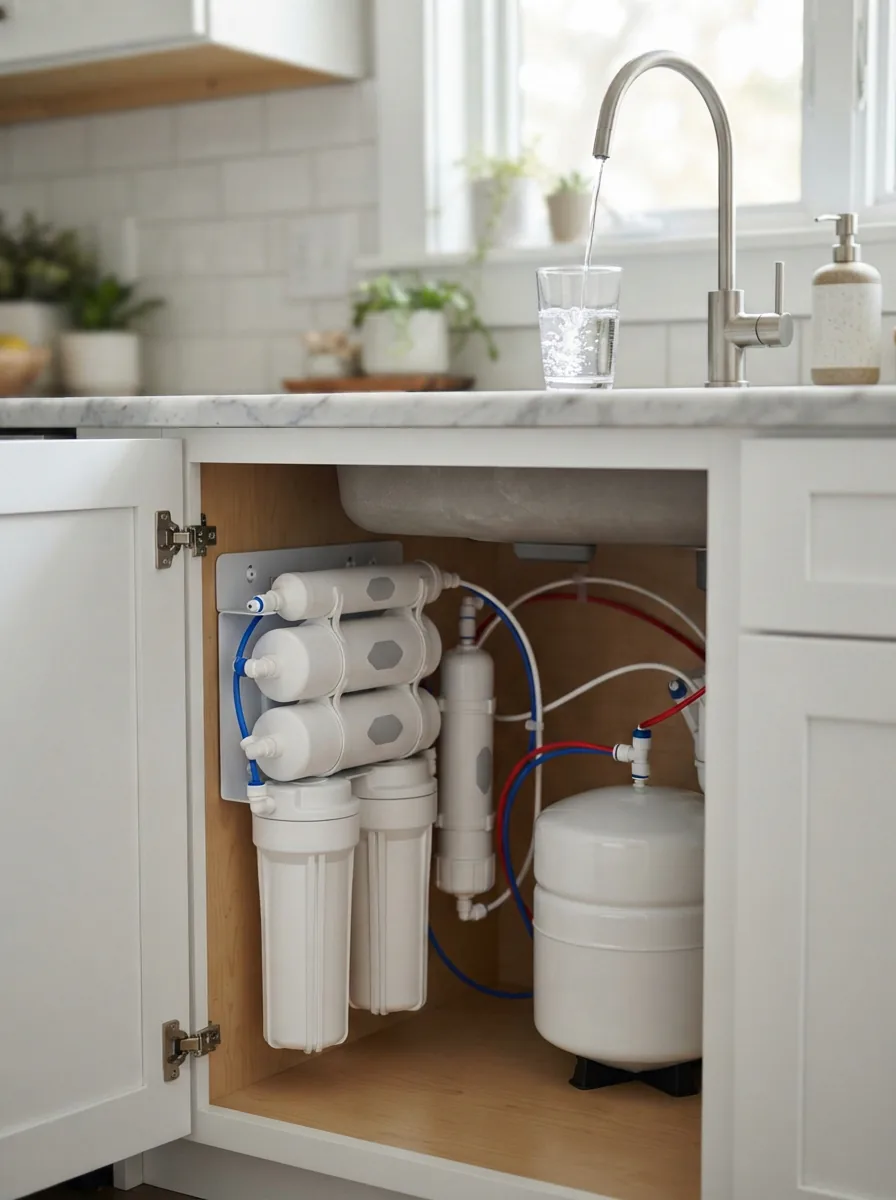
Under-sink reverse osmosis water filtration system with stacked filter housings and blue tubing beside a faucet pouring clear water into a glass

iSpring Water Filter

Compare iSpring reverse osmosis drinking systems, whole-house filters, and softening options to match your water problem, household size, and installation space with certified models.

Modern kitchen scene with clear drinking water poured into a glass beside an undersink reverse osmosis unit and a whole-house filter housing

iSpring Water Systems

Compare iSpring reverse osmosis drinking systems, whole-house filters, and softening setups side by side, then match capacity, stage count, and coverage to your water and your home.
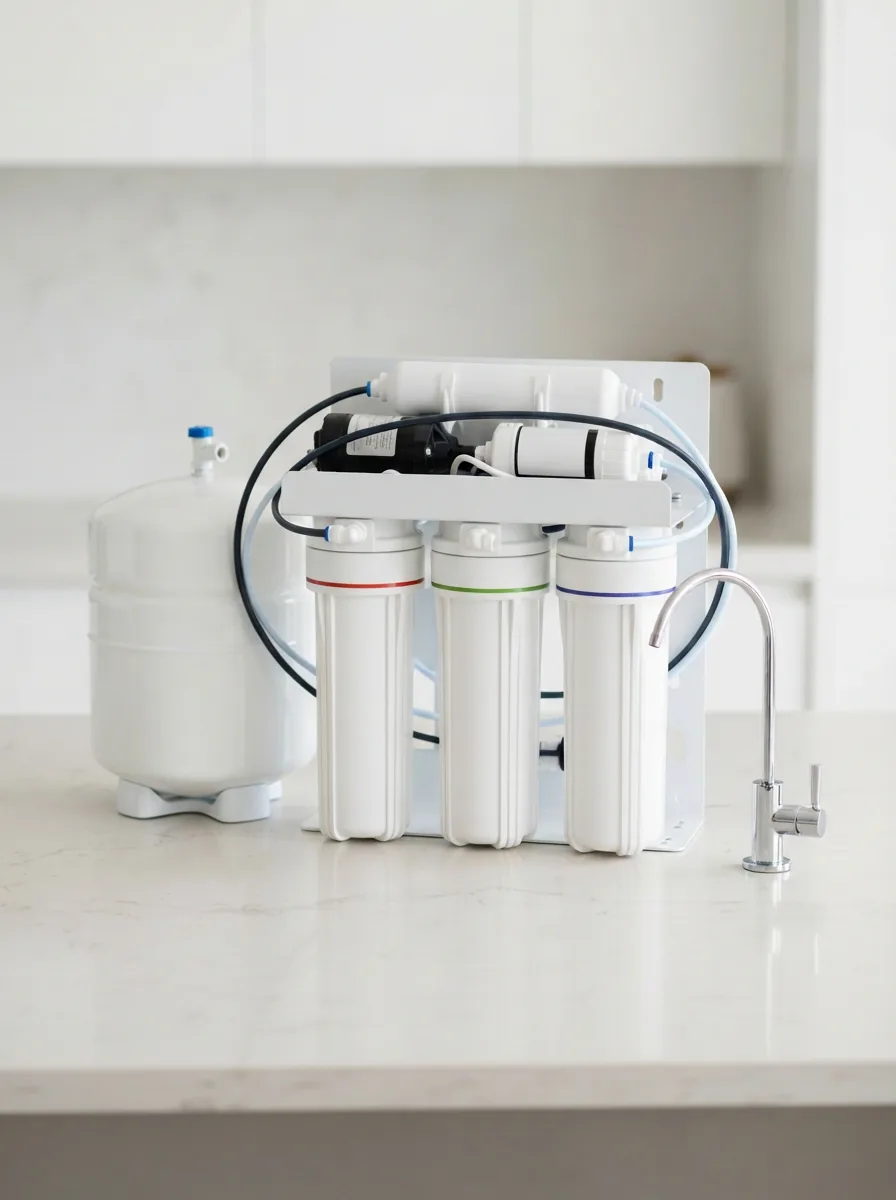
The iSpring RCC7AK six-stage under-sink reverse osmosis system with white filter housings, storage tank, tubing and faucet on a light countertop

iSpring Rcc7ak

The iSpring RCC7AK is an NSF/ANSI 58 certified 6-stage reverse osmosis system that remineralizes water for superb-tasting drinking water.