Filtration

iSpring Water Filter System

Compare iSpring reverse osmosis and whole-house systems by stage count, flow capacity, remineralization and pure-to-drain ratio. Each model below is matched to a water situation, so you can narrow the choice before you buy.
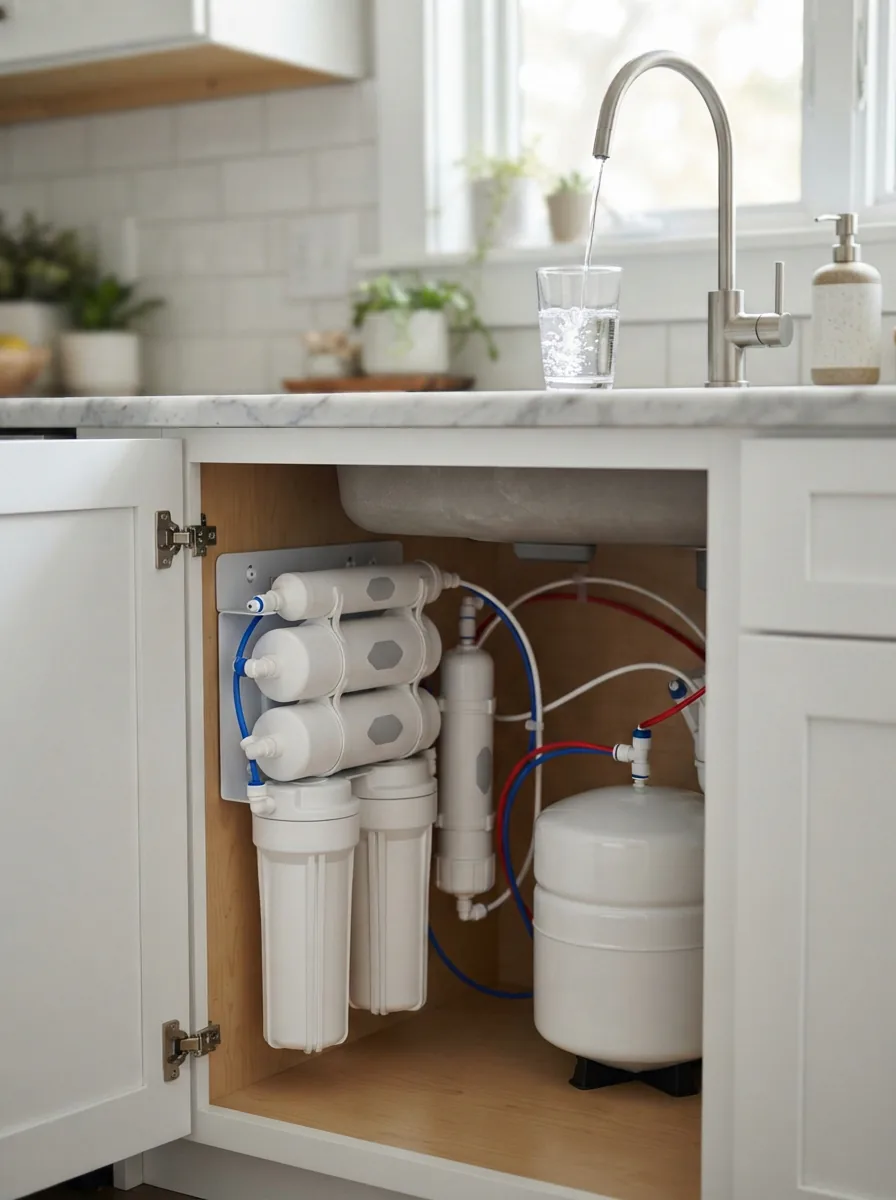
Clear drinking water pouring into a glass above a modern kitchen sink with filtration equipment installed below
New to the Lineup

Recent Systems, Sorted by Capacity and Finish

Six-stage under-sink reverse osmosis water filter system with multiple vertical filter housings and a storage tank, installed in a cabinet

iSpring RCC7AK 6-Stage Alkaline Reverse Osmosis Under Sink System, NSF Certified

Six stages of filtration finish with an alkaline remineralization filter, so purified drinking water carries back natural minerals for a smoother, more refreshing taste. NSF certification backs the performance, and the under-sink layout keeps the counter clear for daily family use.
Under-sink reverse osmosis drinking water system with filter housings, storage tank and a small booster pump mounted on a cabinet floor

iSpring RCC7P-AK Under Sink 6-Stage RO System with Alkaline Remineralization and Pump

Built for households that need consistent pressure, this six-stage under-sink system adds a booster pump to the alkaline remineralization stage. The result is steady flow at the faucet alongside balanced pH and better-tasting water for a busy family kitchen.
Compact tankless under-sink reverse osmosis water filter unit mounted on a cabinet wall with a single faucet above

iSpring RO500AK-BN+UVF8 Tankless RO System with Alkaline Remineralization, 500 GPD

A tankless design rated at 500 GPD delivers fast flow without a storage tank occupying the cabinet. Remineralization restores a natural pH balance, while an LED light adds an extra layer of protection for modern homes short on under-sink space.
Tankless alkaline reverse osmosis water filter with a boost pump and filter life display installed under a kitchen sink

iSpring RO5004F-AK Alkaline RO Water Filter with UV Light and Boost Pump, 500 GPD

Rated at 500 GPD with a boost pump, this tankless alkaline system runs a 2:1 pure-to-drain ratio and reduces PFAS, TDS, lead and arsenic. A filter life monitor keeps replacement timing simple for households that want closely tracked maintenance.
Slim all-in-one tankless reverse osmosis water filter cartridge unit installed under a sink with a faucet filling a glass

iSpring RO10001F Tankless Under Sink Reverse Osmosis Water Filter, 3:1 Pure to Drain

An all-in-one composite filter keeps the unit compact while delivering a 3:1 pure-to-drain ratio and up to two years of filter life. Flow is fast enough to fill an 8 oz glass in about six seconds, and a filter reminder removes guesswork about when to change it.
High-capacity tankless reverse osmosis water filter system installed under a sink in a utility area with large water containers nearby

iSpring RCS5T 500 GPD Tankless RO Water System for Homes and Light Commercial Use

Rated for 500 GPD with a 1.5:1 pure-to-drain ratio, this tankless system suits larger households and light commercial settings that draw more water at once. The under-sink form factor saves floor space compared with a tanked unit, and installation remains standard.
Dual-flow tankless reverse osmosis water filter system with a TDS monitor panel installed under a kitchen sink

iSpring RO1200 Dual-Flow Tankless Reverse Osmosis System with TDS Monitor, 1200 GPD

Dual-flow output rated at 1200 GPD serves households that fill large containers constantly, running a 3:1 pure-to-drain ratio. An onboard TDS monitor shows reduction in real time, while auto flush and a filter reminder keep maintenance predictable under the sink.
Shopper Favorites

Popular Picks for Flow, Whole-House and Well Water

Gray tankless reverse osmosis water filtration unit mounted under a kitchen sink with a drinking faucet above

iSpring RO800G Tankless Under Sink RO System, 800 GPD Fast Flow, 2.5:1 Pure to Drain

Fast flow is the headline here: 800 GPD keeps up with back-to-back filling, and a ratio as high as 2.5:1 limits water sent to the drain. The gray tankless body fits tight cabinets where a storage tank would not, without giving up everyday drinking water capacity.
Three-stage whole house water filter system with large blue filter housings mounted on a garage wall connected to copper piping

iSpring 3-Stage Whole House Water Filter, Reduces Sediment, Taste, Odor, 99% Chlorine

Three large housings treat water at the entry point, addressing sediment, taste, odor and up to 99% of chlorine before it reaches any tap. Households notice fewer chlorine odors in the shower and cleaner-feeling water for laundry, appliances and every fixture.
Five-stage under-sink reverse osmosis water filter system with a storage tank installed beside a kitchen sink cabinet

iSpring NSF-Certified 5-Stage RO System for Well Water, Reduces PFAS, Lead, Fluoride

Designed for well water, this NSF-certified five-stage system targets PFAS, chloramine, lead, fluoride and total dissolved solids that municipal-grade setups may not prioritize. For households drawing from a private well, it is a focused starting point for improving drinking water quality.
Split kitchen and utility-room scene showing filtered drinking water at a sink and water flowing through a whole-house pipe connection

Household and Water-Situation Fit

City water on chlorine, private well water with a longer contaminant list, and busy kitchens that consume a lot of drinking water each call for a different setup. Matching the system to your situation matters more than buying the largest capacity available.

City Homes Reducing Chlorine and Taste

Municipal water is typically treated but can carry a chlorine taste or odor into drinking glasses and ice. A reverse osmosis or carbon-based setup targets that taste directly at the kitchen sink where you notice it most.

Private Wells With Broader Contaminants

Well water often carries sediment, metals or compounds that city systems never face. Heavier-duty multi-stage systems designed for well water reduce those concerns before the water reaches your glass.

Busy Kitchens With High Daily Volume

Households that fill pitchers, bottles and cooking pots back to back need fast flow and a favorable drain ratio. High-GPD tankless models keep pace without waiting on a storage tank to refill.

How to Match an iSpring System to Your Water

Stage Count and What Each Stage Removes

More stages mean more targeted removal: sediment and carbon stages handle chlorine, taste and odor, while additional membranes or mineral filters address dissolved solids. Higher stage counts suit water with several concerns at once.

Pure-to-Drain Ratio and Daily Water Use

Ratios such as 3:1, 2.5:1 or 2:1 describe how much purified water you get per gallon sent to the drain. Households that drink and cook heavily benefit from a higher ratio, which lowers running water cost over time.

Tank Storage Versus Tankless Flow

Tank models hold purified water ready at the faucet, while tankless systems produce on demand at higher GPD ratings. Choose tankless when cabinet space is tight or when you fill large containers back to back.

Types of Filtration Systems

The range splits into whole-house systems that treat every tap and under-sink reverse osmosis units that target drinking and cooking water. Within reverse osmosis, tank and tankless designs plus remineralization options separate the models further.

Whole-House Entry Point Systems

These systems mount where water enters the home, so sediment, chlorine, taste and odor are reduced at every faucet, showerhead and appliance. They suit owners who want consistent water quality throughout the house rather than at one tap.

Under-Sink Reverse Osmosis Units

RO systems focus on the water you drink and cook with, pushing it through a membrane that reduces dissolved solids. They fit in a kitchen cabinet and deliver water through a dedicated faucet at the sink.

Tankless High-Flow Designs

Tankless models produce purified water on demand at ratings from 500 to 1200 GPD. They free up cabinet space and suit continuous filling, though they typically cost more than a comparable tanked setup.

Alkaline Remineralization Stages

Remineralization filters sit after the membrane and add minerals back to improve pH balance and taste. Shoppers who find RO water flat often prefer these models for everyday drinking.

Well-Water Configurations

Well-water setups target concerns such as PFAS, chloramine, lead and fluoride alongside total dissolved solids. They are the right starting point when the water source is a private well rather than a municipal supply.
Row of water filtration equipment types arranged along a workbench, from large whole-house housings to compact under-sink units
What Buyers Report

Experiences From Real Households

I spent weeks comparing stage counts and drain ratios before deciding, and the side-by-side detail here made the trade-offs much clearer. I finally understood why the remineralization stage mattered for taste, and I ordered with a much better sense of what I was getting.
Decorative customer review avatar icon 1
Dana R.
Compared several RO systems before buying
Our well water has its own set of issues, so I needed something built for that rather than a standard city-water setup. Reading through the well-water guidance helped me set realistic expectations about maintenance and what the system would realistically reduce.
Decorative customer review avatar icon 2
Marcus T.
Bought for a home on well water
Space under my sink was genuinely tight, so a storage tank was never going to work. The comparison of tank and tankless flow rates let me pick a high-capacity unit that fills pitchers quickly without crowding the plumbing.
Decorative customer review avatar icon 3
Priya S.
Chose a tankless model for a small cabinet
Drinking water was fine, but the shower and laundry still carried a chlorine smell. The explanation of entry-point versus point-of-use filtration convinced me to add a whole-house stage, and the difference across the house was noticeable within days.
Decorative customer review avatar icon 4
Greg L.
Added whole-house filtration after RO
What sold me was the discussion of pure-to-drain ratios. My previous unit seemed to waste a lot of water, so I picked a model with a higher ratio and a filter monitor. Knowing when to replace filters has taken the guesswork out of the routine.
Decorative customer review avatar icon 5
Helen K.
Wanted lower water use from the drain

Common Buying Questions

Capacity claims, remineralization stages and drain ratios each change how a system behaves day to day. These answers cover the trade-offs most often raised before a purchase decision is made.
Tank systems store purified water so the faucet flows immediately, but they take up more cabinet room. Tankless models produce on demand at high GPD ratings and suit smaller cabinets and steady, fast filling.
A remineralization stage adds back minerals after reverse osmosis filtration, which is often described as improving pH balance and taste. It does not reduce contaminants; it adjusts what is left in the water.
A whole-house system treats water at the entry point, so sediment, chlorine, taste and odor are addressed at every tap, including showers and appliances. An under-sink system addresses drinking and cooking water only.
Ratios range from 1.5:1 up to 3:1 across these systems. Higher ratios produce more purified water per gallon sent to the drain, which matters for heavy daily use or for households watching water consumption.
Some models are explicitly designed for well water and target concerns such as PFAS, chloramine, lead, fluoride and total dissolved solids. Well water varies widely, so confirm your specific conditions before choosing.
Kitchen counter with a glass of clear drinking water beside an open cabinet showing an under-sink water filter connection

Keep Comparing Before You Choose

Installation space, household size and the specific contaminants in your water all change which system performs best. Related buying content walks through sizing, maintenance intervals and what certifications actually confirm, so you can narrow the choice with confidence.
Under-sink reverse osmosis water filtration system with stacked filter housings and blue tubing beside a faucet pouring clear water into a glass

iSpring Water Filter

Compare iSpring reverse osmosis drinking systems, whole-house filters, and softening options to match your water problem, household size, and installation space with certified models.

Modern kitchen scene with clear drinking water poured into a glass beside an undersink reverse osmosis unit and a whole-house filter housing

iSpring Water Systems

Compare iSpring reverse osmosis drinking systems, whole-house filters, and softening setups side by side, then match capacity, stage count, and coverage to your water and your home.
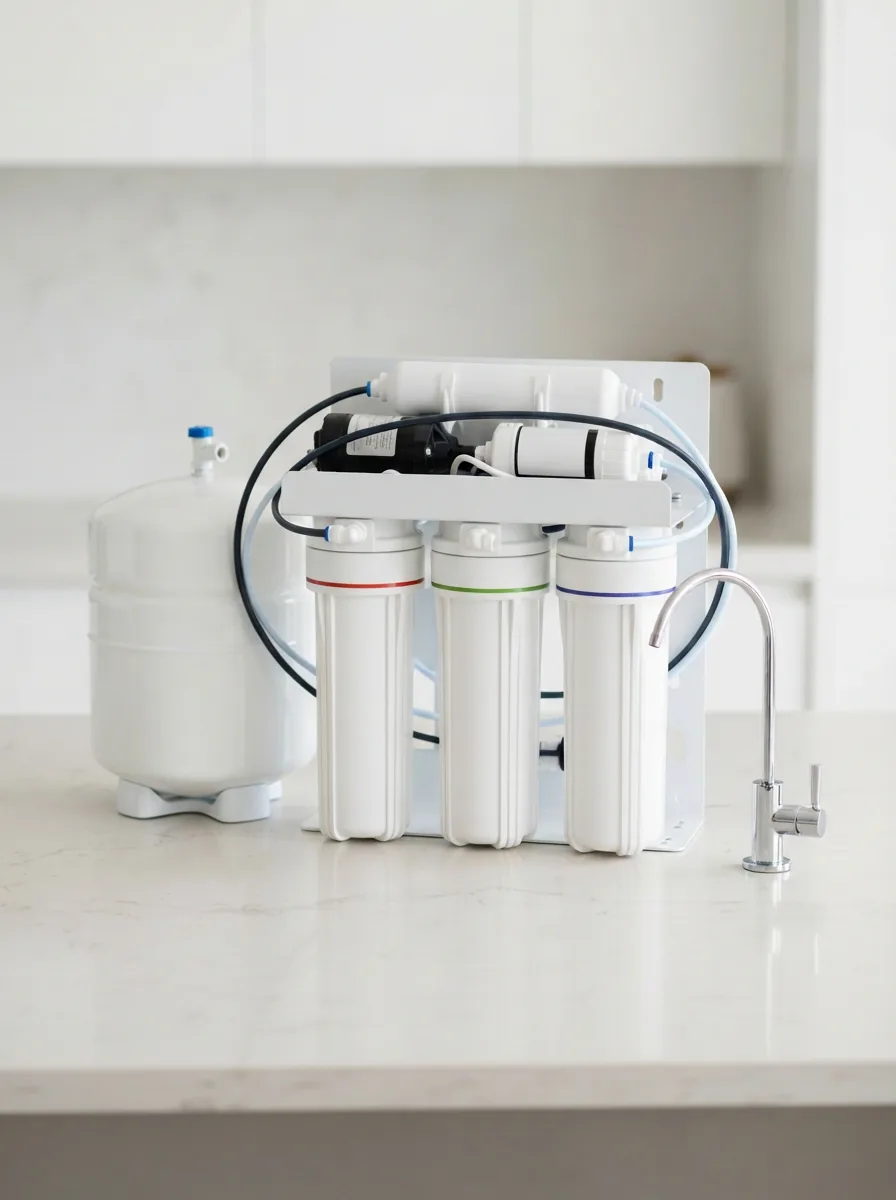
The iSpring RCC7AK six-stage under-sink reverse osmosis system with white filter housings, storage tank, tubing and faucet on a light countertop

iSpring Rcc7ak

The iSpring RCC7AK is an NSF/ANSI 58 certified 6-stage reverse osmosis system that remineralizes water for superb-tasting drinking water.