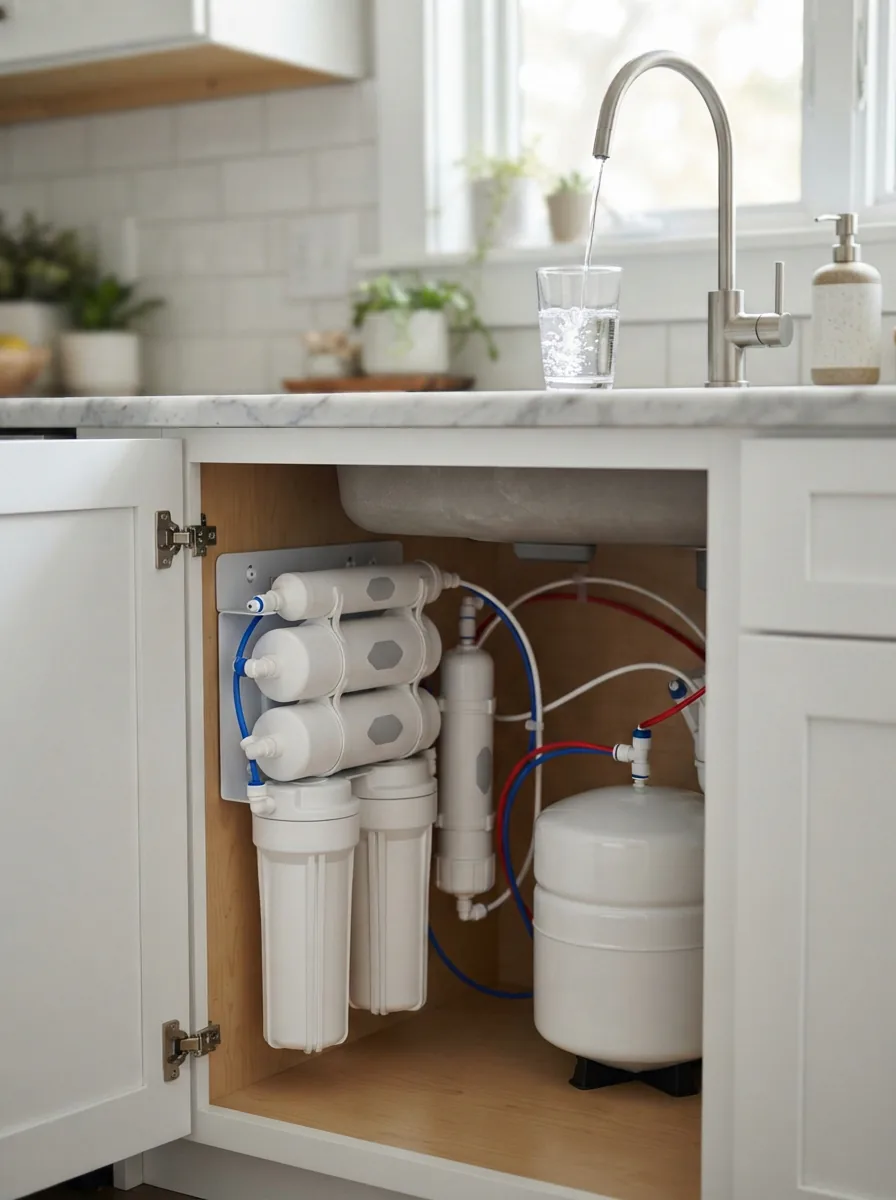
RO Systems

iSpring Ro System

Compare under sink reverse osmosis systems by filtration stages, output rate, tank style, and alkaline remineralization, so you can match the right setup to your water pressure and household size.
Under-sink reverse osmosis water filtration system with filter housings, tubing, and a faucet on a kitchen counter
Six- and Seven-Stage Picks

Reverse Osmosis Systems Compared by Stages and Flow

Six-stage under sink reverse osmosis system with alkaline remineralization filter and faucet on a counter

iSpring RCC7AK 6-Stage Alkaline Reverse Osmosis System, NSF Certified, 75 GPD, Under Sink

Six stages handle sediment, chlorine, and common contaminants, and the 75 GPD output keeps up with a typical household. The final alkaline filter adds minerals back to raise pH, so the water tastes smoother than a standard RO output. NSF certification and straightforward under sink installation make this a sensible first upgrade.
Six-stage reverse osmosis system with booster pump, alkaline filter, and faucet under a sink

iSpring RCC7P-AK 6-Stage Under Sink Reverse Osmosis System with Alkaline Filter and Booster Pump

Where weak household pressure limits other systems, the included booster pump keeps the membrane working at a steady rate. Paired with six filtration stages and an alkaline remineralization filter, it suits well water or older supply lines while still delivering better-tasting drinking water on demand.
Tankless reverse osmosis system with brushed nickel faucet and UV light on a modern kitchen counter

iSpring RO500AK-BN+UVF8 Tankless 500 GPD RO System with Alkaline Remineralization and UV Light

The tankless body clears out the cabinet entirely while still delivering a 500 GPD fast flow rate and a 2:1 pure-to-drain ratio. An LED UV light adds a further safety step, and the alkaline remineralization stage restores natural pH for drinking water that tastes clean rather than flat.
200 GPD six-stage under sink reverse osmosis system with top-mounted faucet and filter housings

iSpring RCC2AK Upgraded 200 GPD 6-Stage Under Sink Reverse Osmosis System, for Large Households

Built for larger households and offices, the upgraded 200 GPD rating shortens the wait between refills. Six stages finish with an alkaline remineralization filter for taste, and the patented top-mounted faucet design simplifies DIY installation in tight cabinets where access is limited.
Seven-stage reverse osmosis system with ultraviolet filter stage and alkaline cartridge under a sink

iSpring RCC7AK-UV 7-Stage 75 GPD Under Sink RO System with Alkaline and UV Filter

A seventh stage adds ultraviolet filtration to the standard alkaline setup, giving households on well or surface water an extra layer of protection. The 75 GPD flow covers daily drinking and cooking needs, and remineralization restores pH so the finished water tastes polished, not stripped.
Black 6-stage reverse osmosis system with booster pump and black faucet on a dark countertop

iSpring RCC7P-AK-BLK 6-Stage Alkaline RO System with Pump and Black Faucet, 2:1 Drain Ratio

Finished in a sleek black faucet and housing, this 6-stage system pairs a booster pump with an efficient 2:1 pure-to-drain ratio. It addresses TDS, PFAS, and microplastics, while the top-mounted faucet design keeps installation simple for anyone fitting a system into a visible kitchen space.
Slim tankless reverse osmosis system with white housing and chrome faucet mounted inside an open sink cabinet

iSpring RO200P 200 GPD Tankless Under Sink Reverse Osmosis System with Fast Flow Faucet

Tankless construction keeps the cabinet clear while the 200 GPD rating refills pitchers and pots quickly enough for a busy household. On-demand filtration removes the storage tank, and remineralization returns minerals for smoother tasting water.
Where Popular Picks Fit

Three More RO Systems for Specific Setups

Seven-stage under sink reverse osmosis system with booster pump and remineralization cartridge inside a cabinet

iSpring RCC1UP-AK 7-Stage Under Sink Reverse Osmosis System with Booster Pump, 100 GPD

A 75 to 100 GPD class system suits a one or two person household that refills glasses and a kettle through the day, and the included pump keeps the membrane working when line pressure drops. Pre-filters swapped every six months protect it.
Compact tankless reverse osmosis filter unit with brushed nickel drinking faucet on a kitchen counter

iSpring RO100P Tankless Reverse Osmosis System, 100 GPD, Brushed Nickel Faucet

The tankless body clears cabinet space entirely while delivering fast on-demand flow, which helps a smaller kitchen that still wants a steady supply of drinking water. An alkaline stage restores pH so the finished taste reads smoother and less flat.
200 GPD tankless reverse osmosis system with white housing and chrome faucet in an under-sink cabinet

iSpring RCC200P 200 GPD Tankless Under Sink Reverse Osmosis System for Busy Homes

A 200 GPD rating shortens the wait between refills, so a busier household fills pitchers and pots without standing over the sink. Tankless construction keeps the cabinet usable for storage, and remineralization returns minerals for a cleaner drinking taste.
Under-sink reverse osmosis system installed beside cleaning supplies in a home kitchen cabinet

Where These RO Systems Earn Their Space

From daily drinking water to well supplies and office kitchens, these systems serve different water problems. The result that matters is steady filtered output that matches how much your household pours each day.

Everyday Drinking Water at Home

A compact system covers glasses, coffee, and cooking water for a small household. The output rating tells you whether pitchers refill at a comfortable pace or whether waiting becomes part of the routine.

Well and Low-Pressure Houses

Well water and older supply lines often push weak pressure through the membrane. Pumped configurations keep the flow steady where standard units slow down, which makes filtered water usable at any hour.

Offices and Busy Family Kitchens

Higher GPD ratings such as 200 or 500 suit shared kitchens where several people pour through the day. Faster output and larger reserves keep the faucet available instead of turning refills into a queue.

How to Compare RO Systems Before You Choose

Flow rate and household size

GPD ratings on these systems run from 75 to 500, and the number that matters is whether the output keeps pace with your household. A 75 GPD unit suits one or two people refilling glasses, while larger families and offices benefit from 200 or 500 GPD models that fill pitchers and pots without a wait.

Water pressure and pump needs

Reverse osmosis slows down when incoming pressure is weak. Models with a booster pump, such as the 6-stage pumped configurations in this range, hold a steady flow on well systems or low-pressure lines, while pump-free units are the simpler choice where municipal pressure is already adequate.

Tank versus tankless design

Traditional RO systems store purified water in a tank under the sink, which gives a consistent reserve but takes cabinet space. Tankless designs filter on demand, freeing that space and adding fast-flow output, though they trade the stored backup for a slimmer footprint and higher flow.

Which RO Setup Fits You

The range splits along a few practical lines: stage count, whether a pump is included, tank or tankless body, and flow rating. Start with your household size, then check pressure, and the right configuration becomes clear.

Seven-Stage Alkaline Setups

A seventh or alkaline final stage adds minerals back after the membrane strips them out, which raises pH and improves taste. Choose one when flat-tasting drinking water is the complaint you most want fixed.

Boosted Pump Configurations

Systems with a booster pump hold a steady flow on well systems or weak municipal lines. Without one, output slows noticeably whenever incoming pressure dips below what the membrane needs.

Tankless High-Flow Systems

Tankless models filter on demand with fast flow rates and a slimmer footprint, freeing under-sink storage. The trade-off is losing the stored reserve a tank keeps ready for immediate pouring.

Compact 75 GPD Essentials

A 75 GPD system is enough for one or two people refilling glasses and a kettle daily. Larger households usually find the wait between refills frustrating and step up to 200 or 500 GPD.

Ultraviolet Safety Stages

UV stages add a further safety step for households on well or surface water, sitting after the membrane rather than replacing it. Pair with alkaline remineralization when taste matters too.
Row of under sink reverse osmosis systems showing tank, tankless, and pump-assisted configurations side by side
Owners on Everyday Use

What RO Owners Notice First at Home

We switched from a pitcher filter and the difference showed up fast. Coffee tastes clearer, and the water spots on our glasses disappeared after the first wash. The tank holds enough for a morning of refills without waiting around the faucet.
Decorative customer review avatar icon 1
Dana R.
Noticed better taste and fewer spots on glasses within two weeks
Our line pressure was low and every system we tried trickled. Adding a pump-based configuration fixed it immediately. Flow stays steady now even when two of us fill pitchers at the same time, which is exactly what we needed.
Decorative customer review avatar icon 2
Marcus T.
Solved slow flow on an older house with weak water pressure
Under-sink space was tight with a garbage disposal already in there, so we went tankless. Output is quick and the cabinet is free again. The only adjustment was remembering that there is no stored reserve to draw from.
Decorative customer review avatar icon 3
Priya S.
Traded cabinet storage for a tankless body and fast output
Maintenance turned out easier than expected. Pre-filters go in twice a year and the membrane lasts longer than we expected. Having reminders on the unit means the schedule never depends on my memory, and the taste stays consistent.
Decorative customer review avatar icon 4
Greg M.
Keeps a simple six-month filter schedule for a family of four
Our first system stripped the water so thoroughly that it tasted flat. The remineralization stage fixed that, and drinking water finally tastes like it came from a spring. It is a small upgrade that changed how the whole family drinks.
Decorative customer review avatar icon 5
Elena V.
Chose an alkaline stage after tasting flat water from plain RO

Choosing an RO System

Answers to the questions shoppers weigh when matching filtration stages, pressure, and tank style to their own kitchen and water supply.
Five stages cover sediment, carbon filtration, and the membrane itself, which is enough for most municipal water. Adding stages for alkaline remineralization or UV light addresses taste, pH, and microbiological concerns rather than basic contaminant removal.
Standard systems rely on household pressure, so if your line runs low, flow drops noticeably. Pumped configurations maintain pressure across the membrane and are the practical fix for well systems or older homes with weak supply.
A tank holds a reserve of purified water so you can pour immediately, at the cost of under-sink space. Tankless systems filter on demand with higher flow rates and a slimmer footprint, and some offer more efficient pure-to-drain ratios.
Reverse osmosis strips out dissolved solids along with contaminants, which can leave water slightly acidic and flat tasting. An alkaline remineralization stage adds minerals back and raises pH, giving drinking water a smoother, more natural taste.
Plan on replacing pre-filters every six months and the membrane every two to three years, depending on your source water. Tankless units often include filter reminders so the schedule does not depend on memory.
Replacement reverse osmosis filter cartridges and a manual laid out beside an open under-sink cabinet

Keep Reading Before You Install

Installation, filter schedules, and pressure testing decide how an RO system performs long after it is mounted. The guides below walk through setup steps and maintenance so your choice keeps working as expected.
Under-sink reverse osmosis water filtration system with stacked filter housings and blue tubing beside a faucet pouring clear water into a glass

iSpring Water Filter

Compare iSpring reverse osmosis drinking systems, whole-house filters, and softening options to match your water problem, household size, and installation space with certified models.

Modern kitchen scene with clear drinking water poured into a glass beside an undersink reverse osmosis unit and a whole-house filter housing

iSpring Water Systems

Compare iSpring reverse osmosis drinking systems, whole-house filters, and softening setups side by side, then match capacity, stage count, and coverage to your water and your home.
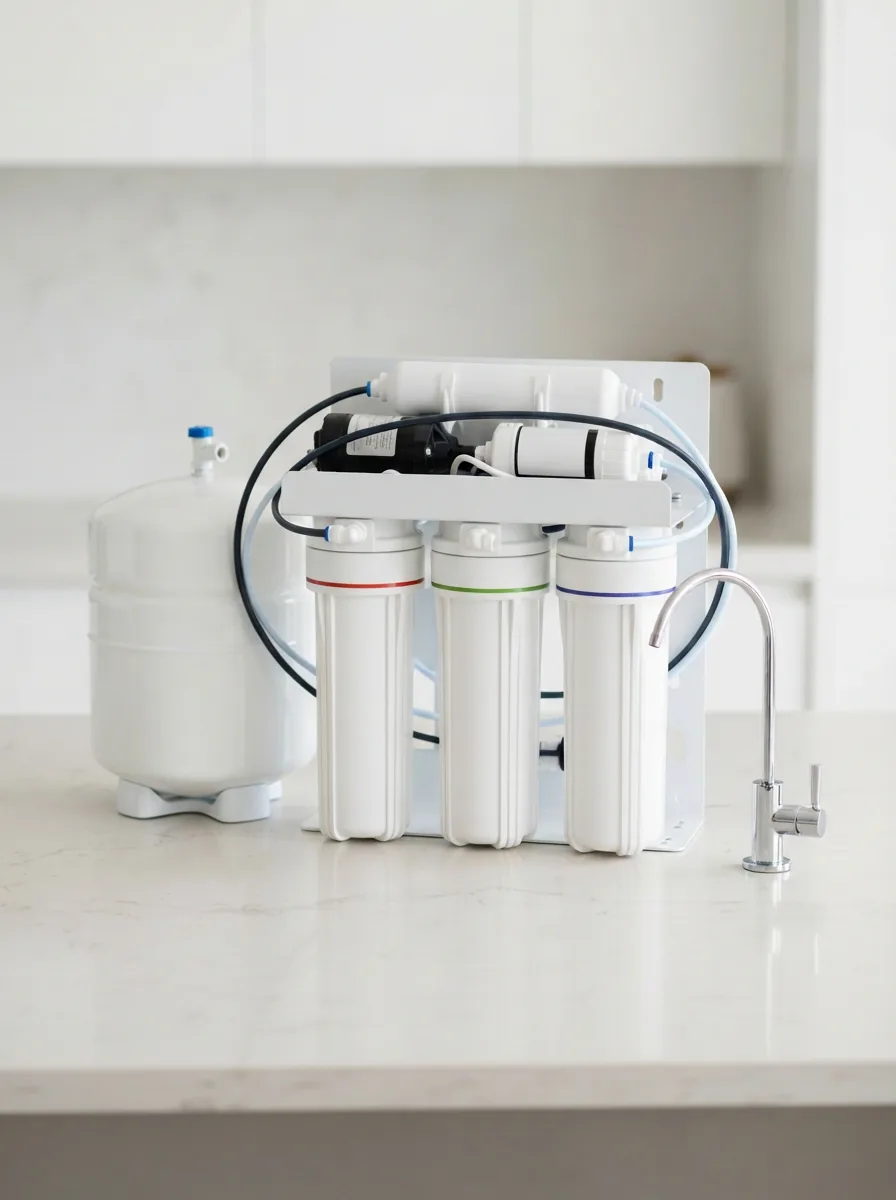
The iSpring RCC7AK six-stage under-sink reverse osmosis system with white filter housings, storage tank, tubing and faucet on a light countertop

iSpring Rcc7ak

The iSpring RCC7AK is an NSF/ANSI 58 certified 6-stage reverse osmosis system that remineralizes water for superb-tasting drinking water.