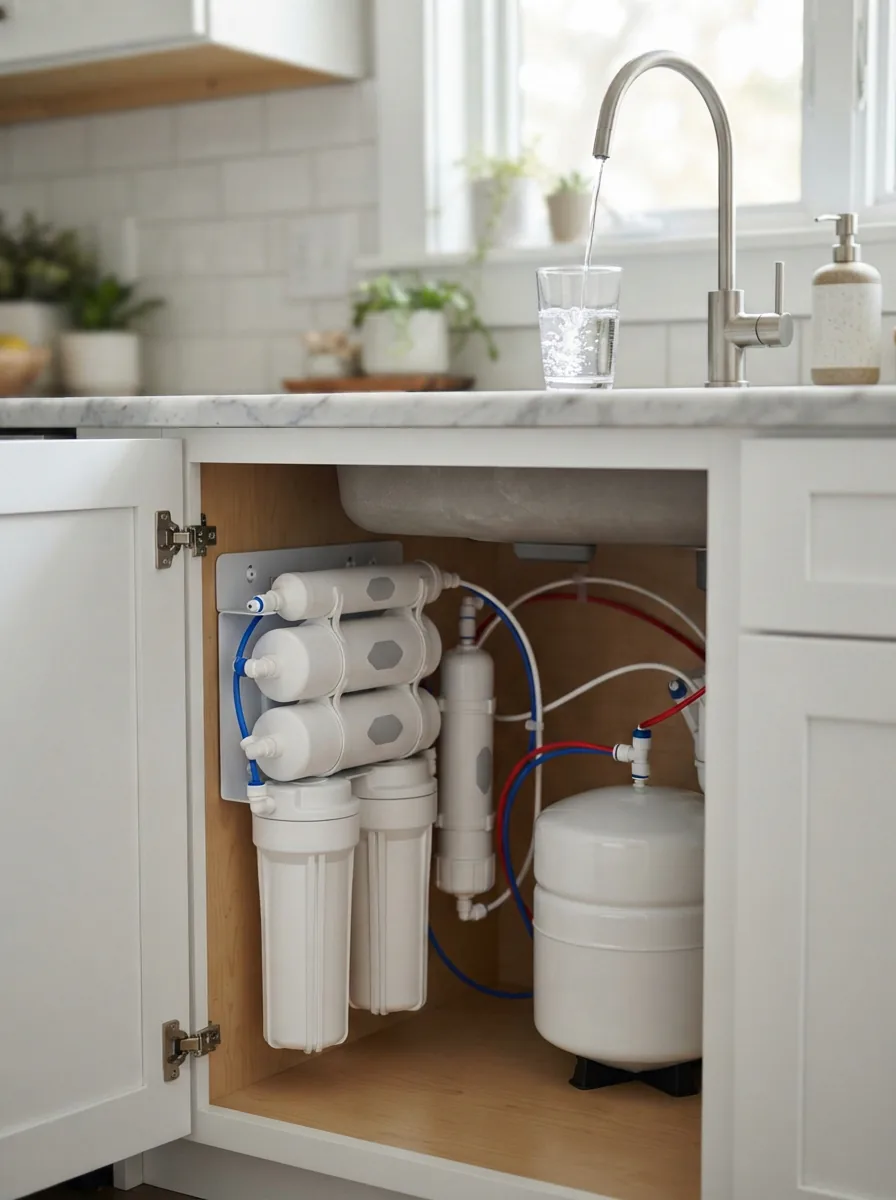
RO Range

iSpring Reverse Osmosis

Compare iSpring reverse osmosis systems by stage count, flow rate, tank or tankless design, and alkaline remineralization to match your household’s daily drinking water needs.
Clean modern kitchen sink cabinet with an under-sink reverse osmosis filtration system of white filter canisters and a tall membrane housing beside a clear glass of water on the counter
Six alkaline RO picks

Alkaline reverse osmosis systems compared

iSpring RCC7AK six-stage alkaline under-sink reverse osmosis system with white filter canisters and a tall membrane housing on a metal base

iSpring RCC7AK, NSF Certified 75 GPD 6-Stage Alkaline RO System with pH Remineralization

Six stages of filtration end with an alkaline remineralization filter that restores minerals and raises pH, so drinking water tastes noticeably better than plain reverse osmosis output. At 75 GPD it suits typical households, and the NSF certification gives shoppers a documented standard to check.
iSpring RCC7AKF3 alkaline six-stage under-sink reverse osmosis system with three spare pre-filter cartridges and a faucet on a studio surface

iSpring RCC7AKF3 Value Pack, Alkaline 6-Stage RO System with Easy-Mount Faucet and 3 Pre-Filters

This value pack pairs the alkaline six-stage filtration of the RCC7AK with a patented easy-mount faucet that simplifies installation, plus three additional pre-filters. Households that want fewer early filter orders and a cleaner under-sink setup get practical savings and less maintenance guesswork.
iSpring RCC7P-AK under-sink six-stage reverse osmosis system with a booster pump mounted beside white filter canisters

iSpring RCC7P-AK Under Sink 6-Stage Reverse Osmosis System with Alkaline Remineralization and Pump

Where the standard under-sink models rely on line pressure, this system adds a pump to push water through the membrane more efficiently. That makes it a better fit for homes with low inlet pressure, and the alkaline stage still delivers mineral-rich, higher-pH drinking water.
iSpring RO500AK-BN tankless reverse osmosis system with a brushed nickel faucet standing on a light gray studio surface

iSpring RO500AK-BN+UVF8 Tankless RO System with Alkaline Remineralization and UV Protection

Removing the storage tank frees cabinet space and keeps water moving on demand. Fast flow plus alkaline remineralization targets natural pH, while UV protection adds a further step for households that want an extra layer of protection alongside standard reverse osmosis filtration.
iSpring RO5004F-AK tall tankless alkaline reverse osmosis water filter with a visible ultraviolet module on a studio surface

iSpring RO5004F-AK, 500 GPD Tankless Alkaline RO Water Filter with UV and Remineralization

Rated at 500 GPD in a tankless body, this system handles back-to-back filling without waiting on a tank. UV filtration and remineralization work together to support balanced pH, which suits busy kitchens that draw filtered water for cooking and drinking throughout the day.
iSpring RCC2AK upgraded under-sink six-stage reverse osmosis system with white filter canisters and a membrane housing on a metal base

iSpring RCC2AK, Upgraded 200 GPD 6-Stage Under Sink RO System with Alkaline Remineralization

An upgraded step up to 200 GPD, this model is built for larger households where a 75 GPD unit might fall behind at peak times. The six-stage layout still finishes with alkaline remineralization, so higher volume does not mean flat-tasting reverse osmosis water.
iSpring RCC7AK-UV seven-stage under-sink reverse osmosis system with white filter canisters, membrane housing and ultraviolet sterilization chamber on a metal base

iSpring RCC7AK-UV, NSF Certified 7-Stage Reverse Osmosis with UV and Alkaline Remineralization

Seven stages extend the familiar layout with UV sterilization and an alkaline remineralization filter, targeting microorganisms while restoring minerals and pH for better taste. Certified to an NSF standard and rated 75 GPD, it fits households drawing from a well or otherwise at risk.
Flow and setup angles

Compare flow rate, tank design and stages

iSpring RO1200 wide tankless dual-flow reverse osmosis system standing on a light gray studio surface

iSpring RO1200 Dual-Flow Tankless Reverse Osmosis System, 1200 GPD for High-Demand Homes

Dual-flow architecture moves water quickly, so a busy kitchen can fill pots and bottles without a storage tank holding things up. At 1200 GPD with remineralization, it targets households and light commercial settings that draw filtered water constantly through the day.
iSpring RCC7 five-stage under-sink reverse osmosis system with white canisters, a membrane housing and a brushed nickel faucet

iSpring RCC7, NSF Certified 5-Stage Under Sink Reverse Osmosis Water Filter, 75 GPD

The five-stage layout is the baseline of the category: sediment, carbon, a reverse osmosis membrane, and post carbon polishing, with a brushed nickel faucet included. Households with municipal water who mainly want chlorine, taste and odor control get a proven, straightforward setup.
iSpring RO10001F compact tankless reverse osmosis filter shown from a slightly elevated angle on a studio surface

iSpring RO10001F Tankless Reverse Osmosis Filter, 3:1 Pure-to-Drain Ratio, 0.69 GPM

A 3:1 pure-to-drain ratio wastes far less water than older designs, which matters where water cost or well capacity is a concern. The all-in-one composite filter lasts up to two years, and a filter reminder plus an 8 oz pour in six seconds keeps daily use simple.
Homeowner filling a glass from an under-sink reverse osmosis faucet at a kitchen sink, with filter canisters visible in the open cabinet below

Who this category serves best

Reverse osmosis suits households wanting high-quality drinking and cooking water at the tap, from municipal supplies seeking better taste to well water needing broader impurity reduction. Weigh taste, flow rate and daily volume.

Better-tasting municipal drinking water

City water is treated but can still carry chlorine taste and odor. A compact under-sink RO system with post carbon and remineralization improves flavor for drinking and cooking.

Households on private well water

Well water varies and may carry sediment and a wider range of impurities. Added pre-filtration stages and a UV option give these households a more complete treatment path.

Busy kitchens and high daily volume

Households that fill pots, bottles and coffee makers all day need capacity. Tankless 500 GPD and dual-flow models deliver fast, continuous filtered water without a refill wait.

What changes your best match

Stages decide what gets removed

Five stages cover sediment, chlorine and taste; six and seven add remineralization or UV. Match the stage list to your water source rather than choosing the highest count.

Capacity against household size

A 75 GPD unit handles typical daily drinking needs, while 200 to 1200 GPD suits larger or heavier-use homes. Undersizing leads to waiting when demand peaks.

Installation and space trade-offs

Tankless and easy-mount faucet designs simplify fitting into tight cabinets, while pump-assisted units need an outlet. Check cabinet clearance and pressure before deciding.

Four ways to narrow it down

Within this category the useful splits are tank versus tankless, remineralizing alkaline stages, and flow rate sized to your household. Start with the water problem, then match capacity and stages to daily volume.

Tank or tankless: cabinet space

Tanked systems hold filtered water ready for immediate pouring; tankless units filter on demand and free up cabinet room. Choose based on how much under-sink space you can spare.

Alkaline remineralization stages

RO removes minerals along with contaminants, which can flatten taste and lower pH. A remineralization stage adds minerals back for better flavor and a more balanced pH.

Flow rate and daily capacity

Gallons per day ratings tell you how much water a system can produce. Larger households or frequent cooking should look above 75 GPD to avoid waiting at peak times.

Stage count and pre-filtration

More stages usually mean added sediment and carbon protection before the membrane. That matters more on well water, where sediment can shorten membrane life quickly.

Pump-assisted and UV options

Homes with low water pressure benefit from a pump that pushes water through the membrane, while a UV stage adds protection for households drawing from a private well.
Overhead flat lay of three compact reverse osmosis drinking water systems of different layouts arranged on a light gray studio surface
From category shoppers

What installing owners report

I had put off replacing our old filter for years because installation looked complicated. The mounting bracket and labeled canisters made the swap an afternoon job, and the difference in taste showed up immediately.
Decorative customer review avatar icon 1
Dana R.
Installation was easier than expected
Our well water kept spotting the glasses and tasting off. Adding remineralization stages changed that, and dishes come out of the washer without the film we used to wipe off by hand. Guests notice it too.
Decorative customer review avatar icon 2
Marcus T.
Worth it after years on well water
The storage tank was eating half the cabinet, so I moved to a tankless unit. Water comes out fast enough for filling a pot, and I finally have room for cleaning supplies underneath. That alone sold me on it.
Decorative customer review avatar icon 3
Priya S.
Went tankless to reclaim cabinet space
I could not tell whether seven stages were necessary for our city water. The comparison made clear that remineralization mattered more than extra stages, so I chose accordingly. Instructions were clear too.
Decorative customer review avatar icon 4
Ben H.
Helpful guidance on stage count
With four of us filling bottles every morning, the smaller unit always seemed to run out. Moving to a higher-capacity system ended the waiting, and the flow feels steady even during the breakfast rush.
Decorative customer review avatar icon 5
Elena V.
Capacity matters more than I assumed

Common questions

Answers to common trade-offs: what remineralization changes, when UV helps, and how tankless compares with tanked.
RO removes minerals along with contaminants, which can leave water tasting flat and slightly acidic. An alkaline stage adds minerals back and raises pH, improving flavor for drinking.
UV adds protection against microorganisms, which is most relevant for households drawing from a private well or otherwise at risk. For treated municipal water it is usually optional.
Most drinking and cooking needs are covered by a 75 GPD system. Larger households, or homes that fill many bottles at once, may want 200 GPD or a tankless high-flow model.
Yes. Removing the storage tank frees the under-sink cabinet for other storage, and water filters on demand. The trade-off is a higher flow requirement and usually a higher price.
Pump-assisted models push water through the membrane more efficiently, which helps homes with low inlet pressure keep production near their rated capacity. Check your pressure before choosing.
Open under-sink cabinet showing a reverse osmosis filter assembly beside a faucet installation kit laid out on the floor

Continue with installation and care guides

Once you have narrowed the choice, the next useful step is reading how owners install these systems, what filter changes cost over a year, and how tankless versus tanked setups behave in real kitchens.
Under-sink reverse osmosis water filtration system with stacked filter housings and blue tubing beside a faucet pouring clear water into a glass

iSpring Water Filter

Compare iSpring reverse osmosis drinking systems, whole-house filters, and softening options to match your water problem, household size, and installation space with certified models.

Modern kitchen scene with clear drinking water poured into a glass beside an undersink reverse osmosis unit and a whole-house filter housing

iSpring Water Systems

Compare iSpring reverse osmosis drinking systems, whole-house filters, and softening setups side by side, then match capacity, stage count, and coverage to your water and your home.
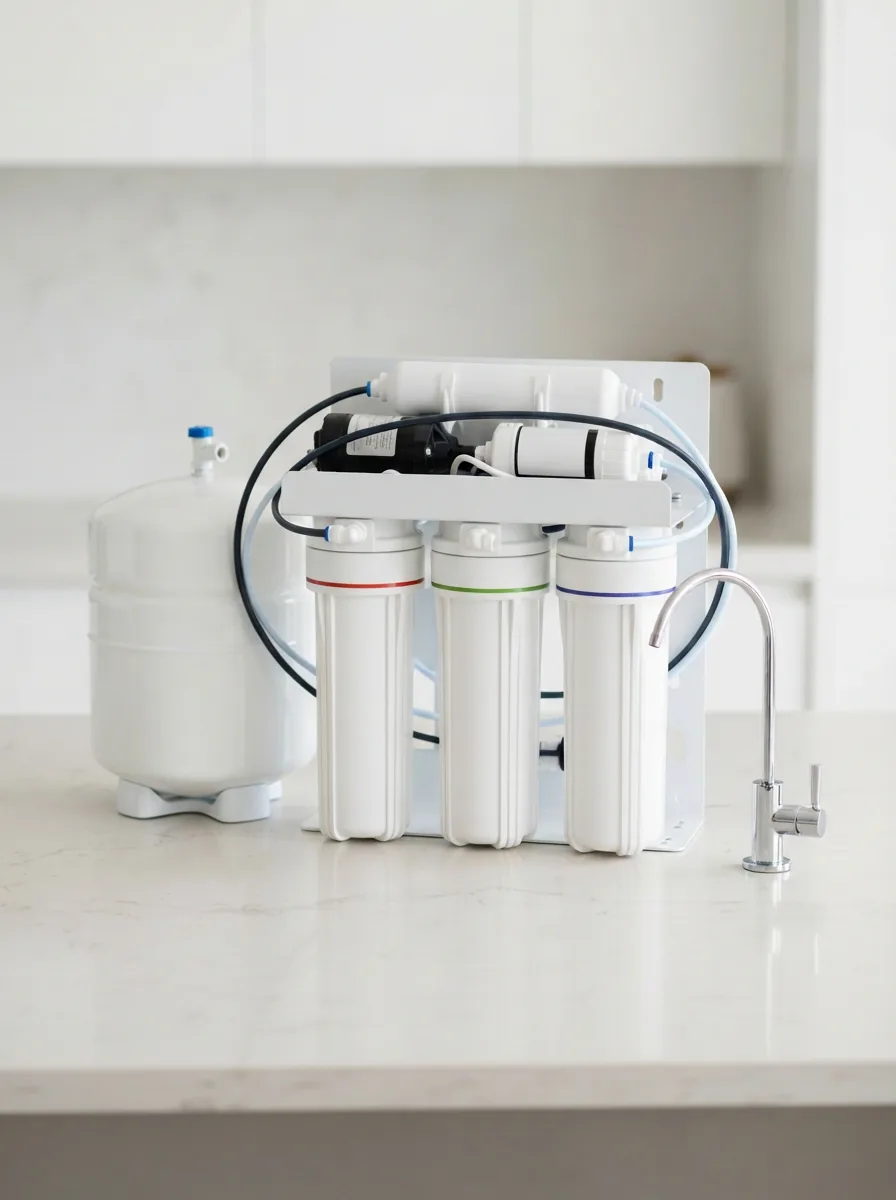
The iSpring RCC7AK six-stage under-sink reverse osmosis system with white filter housings, storage tank, tubing and faucet on a light countertop

iSpring Rcc7ak

The iSpring RCC7AK is an NSF/ANSI 58 certified 6-stage reverse osmosis system that remineralizes water for superb-tasting drinking water.