Water Care

iSpring Filtration

Compare whole-house filters, reverse osmosis drinking systems, and softeners to find the setup that matches your water problem, household size, and plumbing.
Under-sink reverse osmosis manifold with blue filter housings beside a tall whole-house filter tank in a home utility room
Six systems to compare

Certified filtration for every water problem

Six-stage under-sink reverse osmosis filter manifold with white housings and an alkaline cartridge mounted on a cabinet wall

iSpring NSF-Certified 6-Stage RO System, Alkaline Remineralization, Reduces PFAS & Lead

If your city water tastes flat or carries trace contaminants, this six-stage reverse osmosis system removes PFAS, fluoride, chromium, lead, and total dissolved solids, then adds minerals back through an alkaline stage for smoother taste. NSF certification backs the performance.
Five-stage under-sink reverse osmosis system with black filter housings installed inside a kitchen sink cabinet

iSpring NSF-Certified 5-Stage RO System Built for Well Water, Reduces PFAS and Chloramine

Homes on well water usually face more than chlorine, so this five-stage reverse osmosis unit is built for that harder job. It reduces PFAS, chloramine, lead, fluoride, and total dissolved solids at a single drinking tap, keeping treated water separate from the rest of the house supply.
Three-stage whole house water filter manifold with blue housings and brass ports mounted on a garage wall

iSpring 3-Stage Whole House Filter, Cuts Sediment, Taste, Odor and 99% Chlorine, Home-Wide

If your main complaints are cloudy water, gritty sediment, and chlorine smell at every tap, this three-stage whole-house system answers them at the point of entry. It reduces sediment, taste, odor, and up to 99% of chlorine, so showers, laundry, and appliances all benefit at once.
Seven-stage under-sink reverse osmosis unit with a UV chamber and booster pump inside a cabinet

iSpring 7-Stage Under Sink RO with Alkaline, UV and Boost Pump, 100 GPD for Well Water

The seven-stage configuration adds two things most drinking systems skip: ultraviolet light and a booster pump. Ultraviolet treats the water after purification, while the pump keeps reverse osmosis productive on low-pressure supplies. Alkaline remineralization finishes the water at up to 100 gallons per day.
Tall whole-house water softener tank with a digital control valve beside an under-sink reverse osmosis manifold

iSpring 45,000-Grain Whole House Softener with Under Sink RO and Alkaline Filter Combo

Hardness scale and drinking-water contaminants are two separate problems, and this pairing addresses both. A 45,000-grain softener protects the whole home from spots and scale, while the under-sink reverse osmosis unit with an alkaline filter handles the water you actually drink.
Whole-house filter system with three large blue housings on a stainless manifold installed in a basement

iSpring Ultimate Protection Whole House System, Cuts Scale, Lead, PFAS, 99% Chlorine

For households that need broader coverage than a basic sediment and carbon setup, this whole-house system targets scale, lead, PFAS, chloramine, and up to 99% of chlorine. It is the choice when the water report lists several concerns rather than just one.
Certified iSpring water filtration system mounted on a clean utility room wall beside copper plumbing

iSpring certified water filtration system built for steady, everyday home water quality

This certified iSpring system targets the concerns homeowners raise most often: sediment, chlorine, taste, and odor. Filtration and softening solve different problems, so confirm what your water report lists before you size it. Steady capacity and straightforward cartridge changes keep upkeep predictable through the year.
Three more ways to narrow it down

More certified picks for specific water concerns

Whole-house water filtration unit with blue housings mounted on copper plumbing along a clean basement wall

iSpring certified whole-house filtration system for sediment and chlorine reduction

If your main concern is what reaches every fixture, a whole-house configuration addresses sediment and chlorine at the point of entry. Check that the flow rate supports peak demand, since undersizing shows up as pressure loss when several fixtures run at once. Certified reduction claims make the comparison concrete.
Under-sink reverse osmosis system with white housings and a storage tank installed in a kitchen sink cabinet

iSpring under-sink drinking water system for focused point-of-use filtration and easy upkeep

A point-of-use unit keeps treated water at a single tap, which is usually where you drink and cook. That narrower scope keeps installation simpler and the cost lower than treating the whole house. Compare membrane stages and certifications for the specific contaminants listed on your water report before you commit.
Tall cylindrical water softener tank with a digital control valve standing on a basement floor beside copper lines

iSpring water softener system that reduces hardness scale across the home and protects appliances

Hardness minerals cause spots on dishes and scale inside heaters and pipes, and filtration does not remove them. Ion exchange is the technology built for that job, with regeneration handling the routine maintenance. If your water report also lists chlorine or lead, plan on adding filtration alongside the softener.
Kitchen faucet pouring filtered water into a clear glass while a used sediment cartridge and a softener control valve rest on the counter

Three situations this category solves

Different households arrive with different problems: chlorine taste at the tap, sediment clogging fixtures, or hardness spots on dishes. Each points to a different system scope, and matching the fix to the symptom prevents overbuying.

Chlorine taste and odor at every tap

A point-of-entry carbon system reduces chlorine and improves taste across showers, laundry, and drinking taps at once. Certified reduction percentages show what the media actually removes.

Sediment and rust in an older home

Gritty water and rust flecks usually mean sediment is passing through. A sediment stage sized to your flow rate protects appliances and fixtures before finer stages handle taste and chemistry.

Hardness scale and spot buildup

Spots on dishes and scale on fixtures come from hardness minerals, which filtration alone does not remove. A softener handles that job, and pairing it with a drinking-water unit covers the water you consume.

What to compare before you choose

Where the water enters your home

Point-of-entry systems treat every faucet, shower, and appliance at once. Point-of-use systems treat a single tap. Deciding which scope you need shapes every specification that follows.

Contaminants you actually need to reduce

Sediment and chlorine respond to carbon and sediment stages. Fluoride, PFAS, lead, and total dissolved solids require reverse osmosis. Iron and manganese need oxidation plus regeneration.

Flow rate and household demand

A 15-GPM whole-house unit supports several fixtures running at once, while a 100-GPD under-sink system supplies one drinking tap. Undersizing shows up as pressure loss at peak use.

Five directions to compare

Filtration splits into clear directions: point-of-entry systems for the whole home, point-of-use units at a single tap, and softeners for hardness. Match each one to your water report, your plumbing, and the fixtures that matter.

Point-of-entry coverage for every fixture

Whole-house systems treat water where it enters the home, so every tap, shower, and appliance benefits at once. Sediment stages usually come first. Confirm the flow rate supports peak demand before you size the unit.

Point-of-use systems at a single tap

Under-sink units treat water at one faucet, which keeps installation simpler and the cost lower. This scope fits drinking and cooking water, and it leaves shower pressure and laundry load untouched.

Reverse osmosis for dissolved contaminants

Reverse osmosis is the technology that reduces fluoride, lead, PFAS, chloramine, and total dissolved solids. If your water report lists those, carbon stages on their own will not be enough.

Softeners for hardness and scale control

Softeners use ion exchange to remove hardness minerals, which reduces scale on fixtures and spots on dishes. They do not reduce chlorine taste, sediment, lead, or PFAS, so filtration remains a separate job.

Combination setups for mixed water problems

Many homes need two scopes at once: a whole-house unit for sediment and chlorine, plus an under-sink reverse osmosis unit for drinking water. Pairing them keeps every fixture covered and the glass better tasting.
Five water treatment setups lined up along a utility room wall: a whole-house tank, a softener, and under-sink filter components
How the choice played out

Real experiences from the decision onward

I started with my water report and realized chlorine taste and sediment were two separate problems. Comparing whole-house systems side by side made the scope decision straightforward. Treating at the point of entry improved every shower and faucet together, which is the result I wanted.
Decorative customer review avatar icon 1
Dana R., homeowner
Whole-house scope decided from the water report
Our well water tested high for iron and sediment, so a basic carbon filter would not have been enough. I compared reverse osmosis options that also addressed chloramine and PFAS. Keeping treated water at one tap while the rest of the house stays on the well supply works well for our family.
Decorative customer review avatar icon 2
Marcus T., well owner
Well water meant a harder filtration job
Four of us run showers and the dishwasher at the same time every morning, so flow rate was the number I watched. Undersizing would have shown up as pressure loss exactly when we needed water most. Sizing to peak demand kept pressure steady everywhere in the house.
Decorative customer review avatar icon 3
Priya S., family of four
Flow rate sized to peak household demand
I assumed a softener would handle everything. It reduced the spots on our dishes and the scale on the fixtures, but the chlorine taste was still there. Adding filtration alongside it solved that. Knowing which technology reduces which contaminant kept me from buying the wrong system twice.
Decorative customer review avatar icon 4
Kevin O., first-time buyer
Expectations about softening, corrected early
What finally narrowed my shortlist was certification. Seeing which claims were backed by testing removed most of the guesswork. I compared reduction claims for lead, fluoride, and total dissolved solids, then matched capacity to our size. The choice felt factual rather than promotional.
Decorative customer review avatar icon 5
Elena M., careful researcher
Certifications settled the final shortlist

Common questions

Answers to the questions that decide scope, technology, and upkeep before you commit to a system.
Whole-house systems handle sediment, chlorine, and hardness at every tap. Under-sink reverse osmosis handles drinking-water contaminants like fluoride, lead, and PFAS. Many homes run both together.
If your concern is fluoride, lead, PFAS, chloramine, or total dissolved solids, reverse osmosis is the technology that reduces them. For taste and odor alone, carbon stages are usually enough.
Private wells vary widely, and often carry sediment, iron, manganese, and higher contaminant loads. Filtration sized for that scenario, plus oxidation or softening where needed, holds up far better than basic carbon.
Whole-house cartridges depend on your sediment load, so check pressure and flow regularly. Reverse osmosis membranes and remineralization stages follow a longer schedule, and automatic regeneration cuts hands-on work.
No. Softeners remove hardness minerals through ion exchange, which reduces scale and water spots. They do not reduce chlorine taste, sediment, lead, or PFAS, so filtering remains a separate job.
Clear glass of water beside a drop-test kit and a folded specification sheet on a kitchen counter

Keep going with related water guides

Water reports, installation, and filter upkeep all shape the decision once you narrow the category. These related reads cover the follow-up questions that come up after a system type looks right for your home.
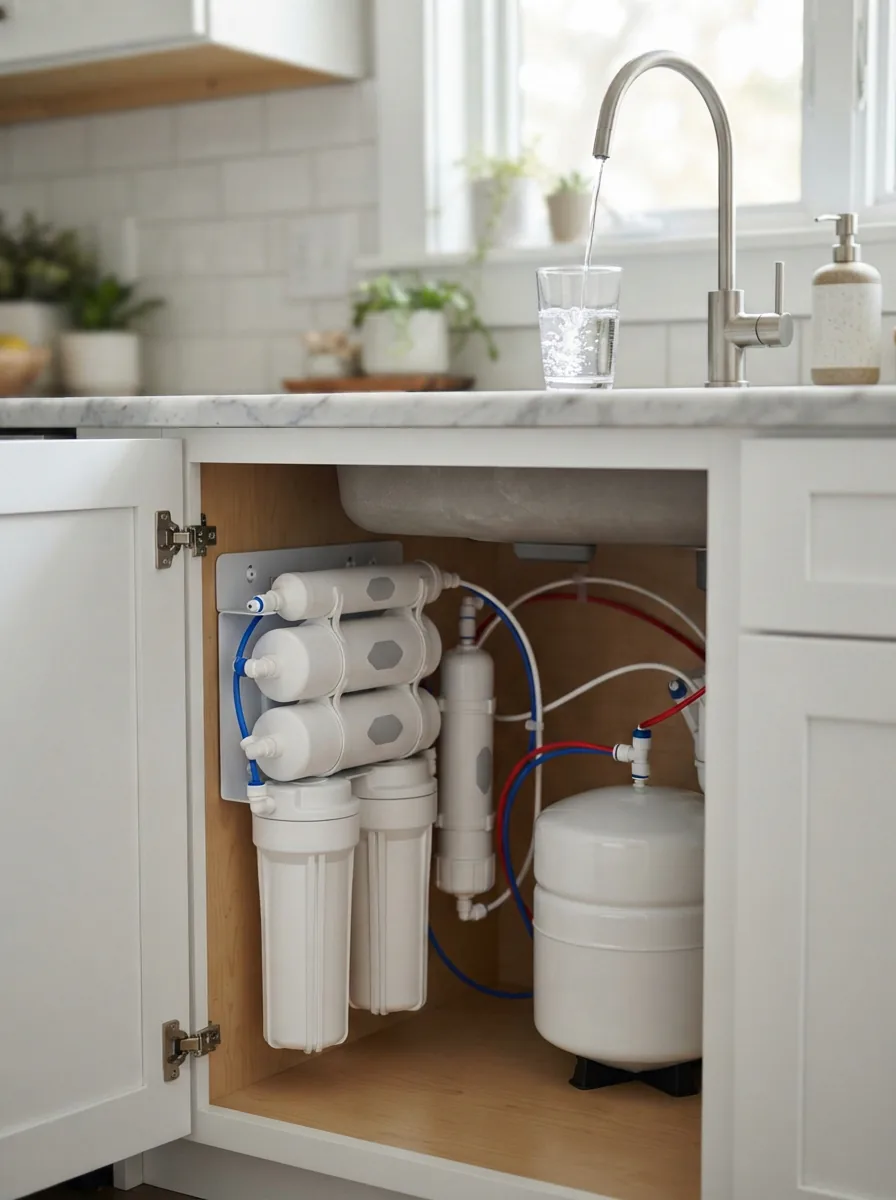
Under-sink reverse osmosis water filtration system with stacked filter housings and blue tubing beside a faucet pouring clear water into a glass

iSpring Water Filter

Compare iSpring reverse osmosis drinking systems, whole-house filters, and softening options to match your water problem, household size, and installation space with certified models.

Modern kitchen scene with clear drinking water poured into a glass beside an undersink reverse osmosis unit and a whole-house filter housing

iSpring Water Systems

Compare iSpring reverse osmosis drinking systems, whole-house filters, and softening setups side by side, then match capacity, stage count, and coverage to your water and your home.
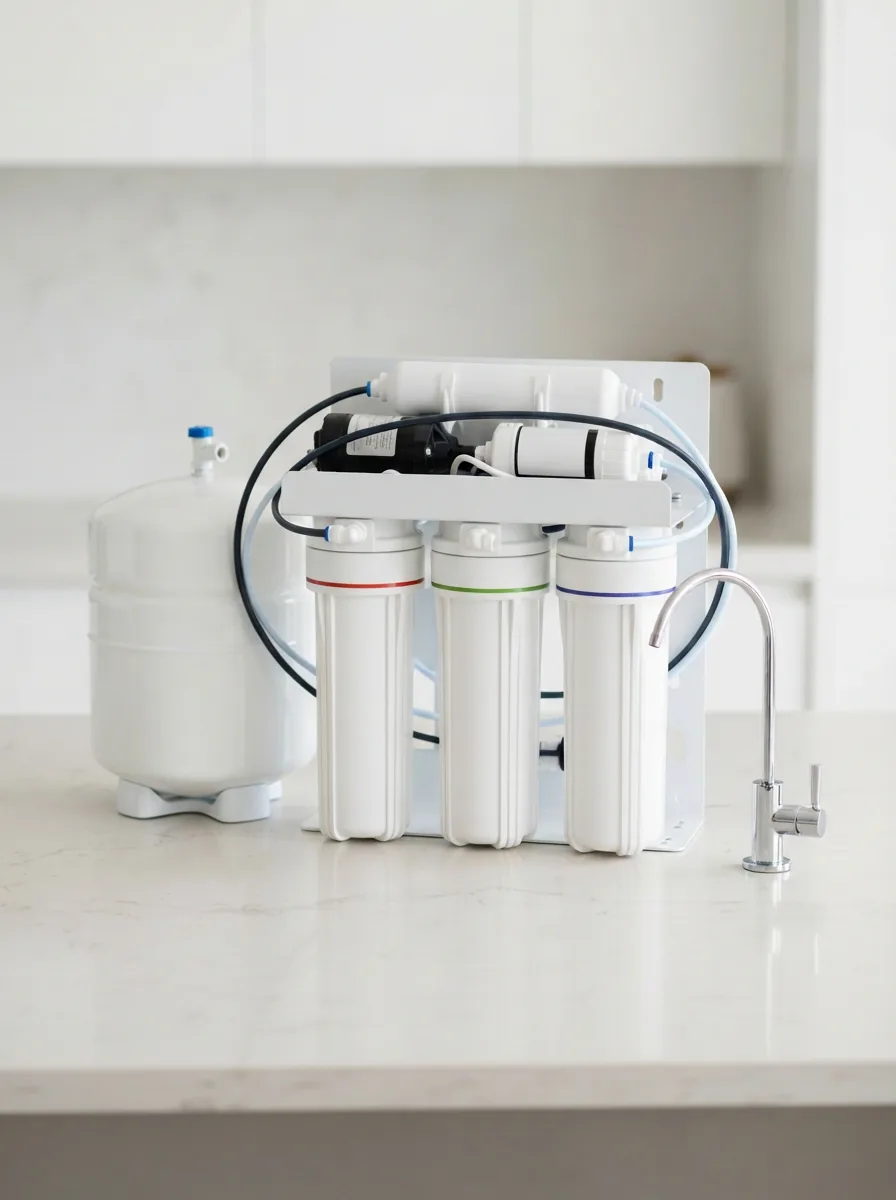
The iSpring RCC7AK six-stage under-sink reverse osmosis system with white filter housings, storage tank, tubing and faucet on a light countertop

iSpring Rcc7ak

The iSpring RCC7AK is an NSF/ANSI 58 certified 6-stage reverse osmosis system that remineralizes water for superb-tasting drinking water.